

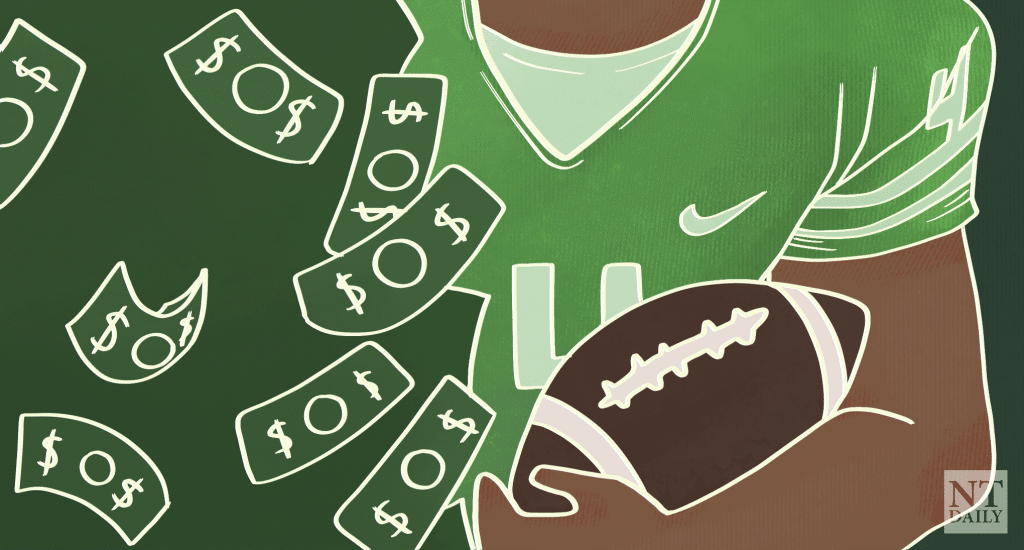
, college athletes across the country won a small but important battle.)
With the Supreme Court unanimously ruling against the NCAA on Monday in a landmark antitrust case (NCAA v. Alston), college athletes across the country won a small but important battle.
While quotes from Justice Brett Kavanaugh’s concurring opinion such as “the NCAA is not above the law” have gone viral for their bluntness, it is important to note the Supreme Court’s ruling is not an end to amateurism or college sports as currently constituted. It is, however, a step toward more compensation for college athletes as the NCAA can no longer limit education-related benefits.
This qualifier of “education-related benefits” is a key aspect of the ruling as it does not directly pertain to anything outside of this and therefore does not have terribly far-reaching implications. It does not appear the ruling itself will affect universities very heavily at all, including North Texas.
The concept of “amateurism” is very much intact, which means athletes still cannot be paid like professionals or even profit from their name, image and likeness just yet. However, it does ensure the NCAA cannot limit education-related benefits for student-athletes such as tutoring, laptops or study-abroad programs, providing potential for athletes across the country to receive more compensation.
The ruling is thus a step forward for college athletes but a far cry from “professionalizing” college sports.
Looking toward the future, Monday’s ruling could be a battle won in the war of making payments to NCAA athletes legal, helping bring substantial change to how college athletics function. As granting student-athletes rights to their name, image and likeness seems imminent, players being paid for promotions and otherwise could soon blur the lines between professional and amateur sports.
Recruiting in the NCAA could become more akin to signing free agents rather than recruiting student-athletes if colleges are soon able to pay players outright. More affluent schools would be able to (legally) pay for athletes to play for their university teams and gain a leg up on smaller schools as a result.
Additionally, situations like the 90’s University of Michigan Fab Five incident and other payment scandals could be avoided with players receiving monetary gain by other means such as through promotions and use of likeness. Providing realistic means of additional compensation would remove the need for these under-the-table dealings and bring everything out into the light of day, helping limit controversy.
Although change in how and to what extent college athletes are compensated is necessary and seems to be on the horizon, it would need to come with limits. A college-level athlete should not be paid excessive amounts of money, and the payment should be based on a player’s athletic merit, meaning the best players who garner the most exposure (such as former Clemson University quarterback Trevor Lawrence in 2020) would receive the highest amount of money.
This would also mean players marketing themselves should be able to make money.
There should be no issue with athletes making money themselves as regular students are able to do the same. If the NCAA truly wants its athletes to be considered students too, they need to be treated the same in terms of earning money.
However, regardless of what speculatively could happen in the future, the Supreme Court loss was a key first step in a likely long process that could lead to players receiving more compensation. With the Supreme Court seeming to side heavily with athletes in this case, momentum is on the athletes’ side to continue gaining more victories over the NCAA.
Monday’s ruling does not change much immediately, but it does plant seeds which can bloom into student-athletes receiving much more compensation than they do today.
Featured Illustration by Miranda Thomas