


Why does Halloween make us think of trick-or-treating, witches on broomsticks, bobbing for apples, and carved pumpkins? Why are carved pumpkins called Jack-O’-Lanterns? Here’s a look back at the origins of Halloween traditions and why we celebrate Halloween the way we do today.
Why Is It Called “Halloween”?
As with many holidays, Halloween is rooted in our agricultural past, marking the end of harvesttime and the beginning of the new year.
The origin of Halloween and many of its customs can be traced to Samhain, an ancient pagan Celtic festival that is Gaelic for “summer’s end,” a day to bid good-bye to warmth and light. It marks the end of the harvest season and the start of winter (the darker “half” of the year).
The ancient Celts believed that the veil between the worlds of the living and the dead was at its thinnest during Samhain, thereby making it the ideal time to communicate with the deceased and to divine the future.
After the Roman Empire took over Celt-occupied lands in the 1st century A.D., the Romans combined many of the Celtic traditions, including Samhain, with their own. This day evolved into All Hallows’ Day or Allhallowmas, “hallow” meaning “to sanctify.”
Years later, the Roman Catholic Church designated November 1 as All Saints’ Day, in honor of all Catholic saints. It was celebrated with a mass, bonfires, and people costumed as angels and saints parading through the villages. November 2 brings All Souls’ Day, a holy day set aside for honoring the dead and departed.
Just as November 1 was once called All Hallows’ Day, October 31 was called All Hallows’ Eve. Over time, All Hallows’ Eve was shortened to Halloween!
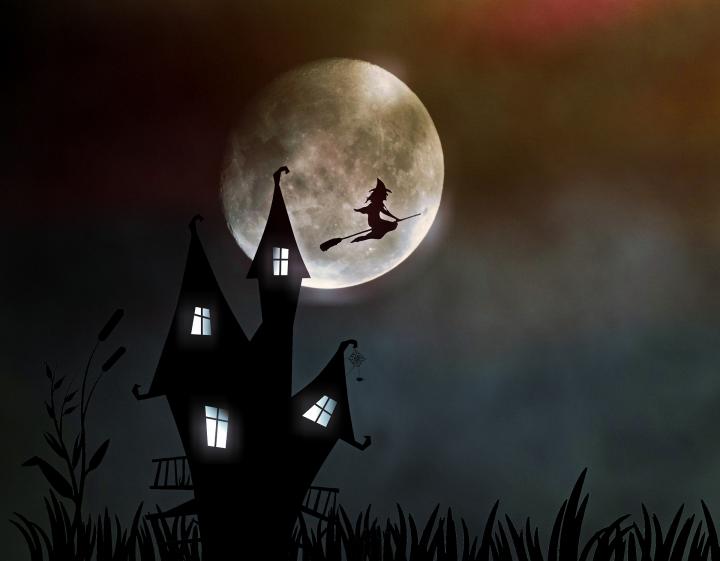
Witches on Broomsticks
Why are witches a common costume on Halloween? In the Middle Ages, women labeled as witches (from the Anglo-Saxon word wicce, or “wise one”) practiced divination. Such a woman would curl up near a fireplace and go into a trancelike state by chanting, meditating, or using hallucinogenic herbs. Superstitious people believed that these women flew out of their chimneys on broomsticks and terrorized the countryside with their magical deeds.
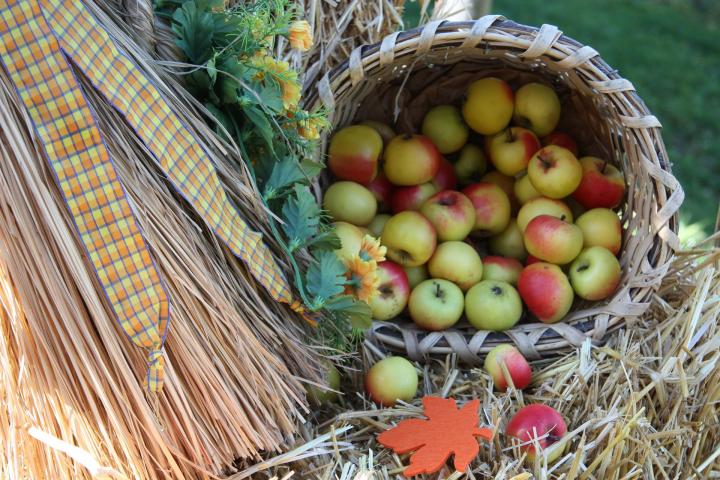
Bobbing for Apples
Have you ever bobbed for apples? The Roman festival for Pomona, the goddess of fruit and orchards, was celebrated around November 1. Romans believed that the first person to catch a bobbing apple with his or her teeth would be the first to marry in the new year.
They also believed that apple peels held the secret to true love. The lovelorn would peel an apple in one long, unbroken piece and throw it over his or her shoulder while being spun around. The shape of the peel on the ground represented the first initial of the peeler’s true love.
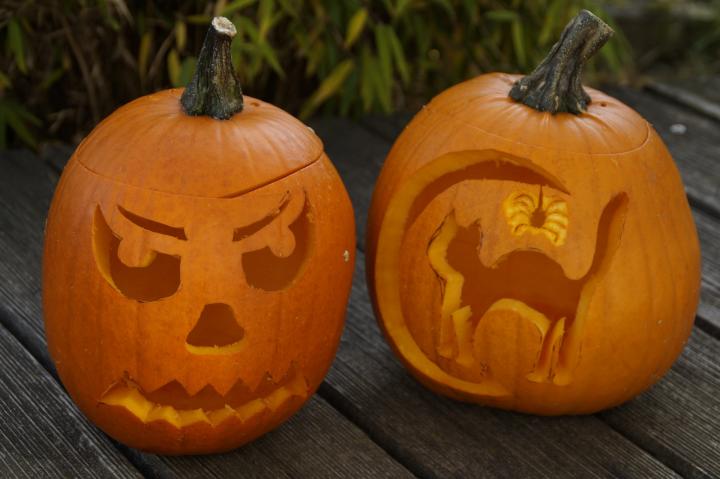
Why We Carve Pumpkins:
Turnip lanterns were used before the modern pumpkin jack-o’-lantern! In ancient Ireland, revelers would hollow out large turnips (or potatoes or beets) and carve them into a demon’s face to frighten away spirits. They would light the turnips from within with a candle or a piece of smoldering coal.
They then placed the lanterns in the windows and doorways of their homes, in the belief that the carvings would scare off evil spirits and welcome deceased loved ones inside. Irish immigrants arriving in the New World during the early 1800s found the plentiful, easier-to-carve pumpkins ready substitutes for turnips.
See our fun video about the history of pumpkin carving. But if you’d like to carve some creepy turnips, try it the old-fashioned way!
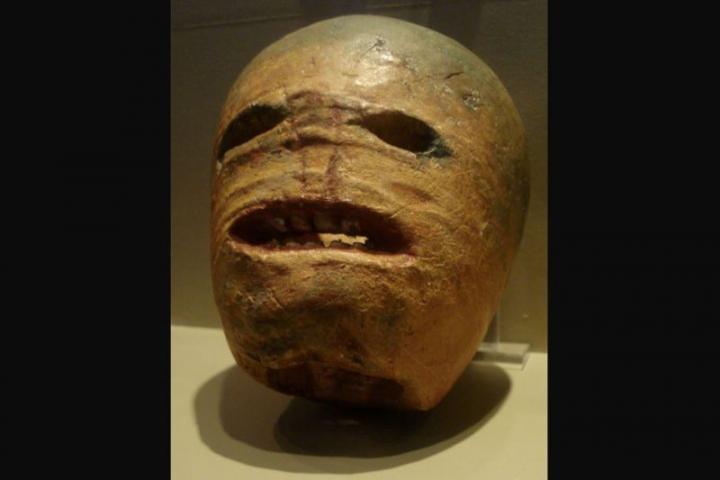
We never thought root vegetables could be this frightening!
What is the Origin of Jack-o’-Lanterns?
The term “Jack-o’-lantern” originated in 17th-century Britain, where it was used to refer to a man with a lantern or to a night watchman. The British would call men whose names they didn’t know by a common name like Jack. Thus, an unknown man carrying a lantern was sometimes called “Jack with the lantern” or “Jack of the lantern.”
According to one theory, the term “Jack-o’-lantern” originated from Irish folklore. As the story goes, a man called Stingy Jack invited the devil out for drinks and asked him to play a parlor game to see if the devil could turn himself into a coin so that they could pay for the drinks. After the devil obliged, Jack ran off with the coin and devil was trapped inside it. Jack freed the devil based on the deal that he would not claim Jack’s soul when he died. Jack also played another trick on the devil to extend his life.
When Jack finally died, God wouldn’t allow him into heaven and the devil wouldn’t allow him into hell. Instead, Jack O’Lantern aimlessly roams the earth for eternity with a lantern carved from a turnip to light his way. Whether this theory about the origin of the term “Jack-o’-lantern” is proven or not, it’s become a popular and not-too-scary ghost story today.
Some believe that the Jack-o-Lanterns represent Christian souls in purgatory. On All Saints’ Day (November 1) Roman Catholics visit tombstones to honor the memory of deceased relatives and on All Souls’ Day (November 2), Catholics pray for those souls believed to be in purgatory because they died with the guilt of lesser sins on their souls. Stingy Jack is believed to be roaming endlessly in a sort of purgatory, so it’s not difficult to see the connection.
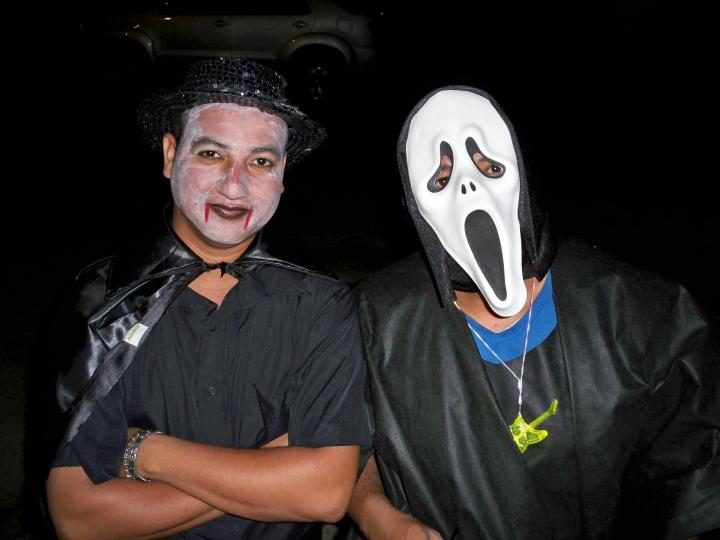

Why Do We Wear Scary Costumes?
During Samhain, superstitious country folk would disguise themselves with animal skins and masks made from sailcloth or linen. In costume, they would go outdoors and make lots of noise, in an effort to fool troublesome spirits into thinking that they were one of them or to scare them away.
See how to make easy Halloween makeup using only items from your pantry!
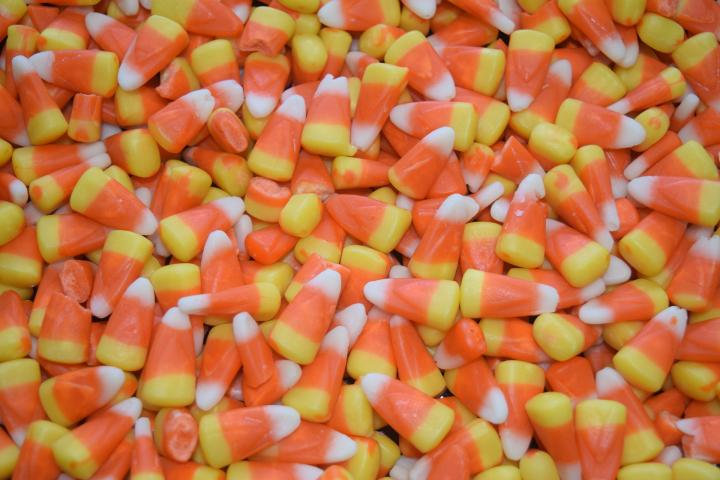
Why Do We Trick-or-Treat?
An extra place was set at the table during Samhain to serve as an offering to deceased loved ones. In addition, food was placed outside, near the doorway, to appease bothersome spirits who might otherwise play a trick on the inhabitants, such as tipping over containers of milk.
Today’s trick-or-treating dates to the Middle Ages, when poor people collected baked goods called “soul cakes” from the wealthy. In exchange for cakes, the poor promised to pray for the giver’s deceased loved ones.
See the Almanac’s classic Halloween treats from caramel apples to peanut brittle!